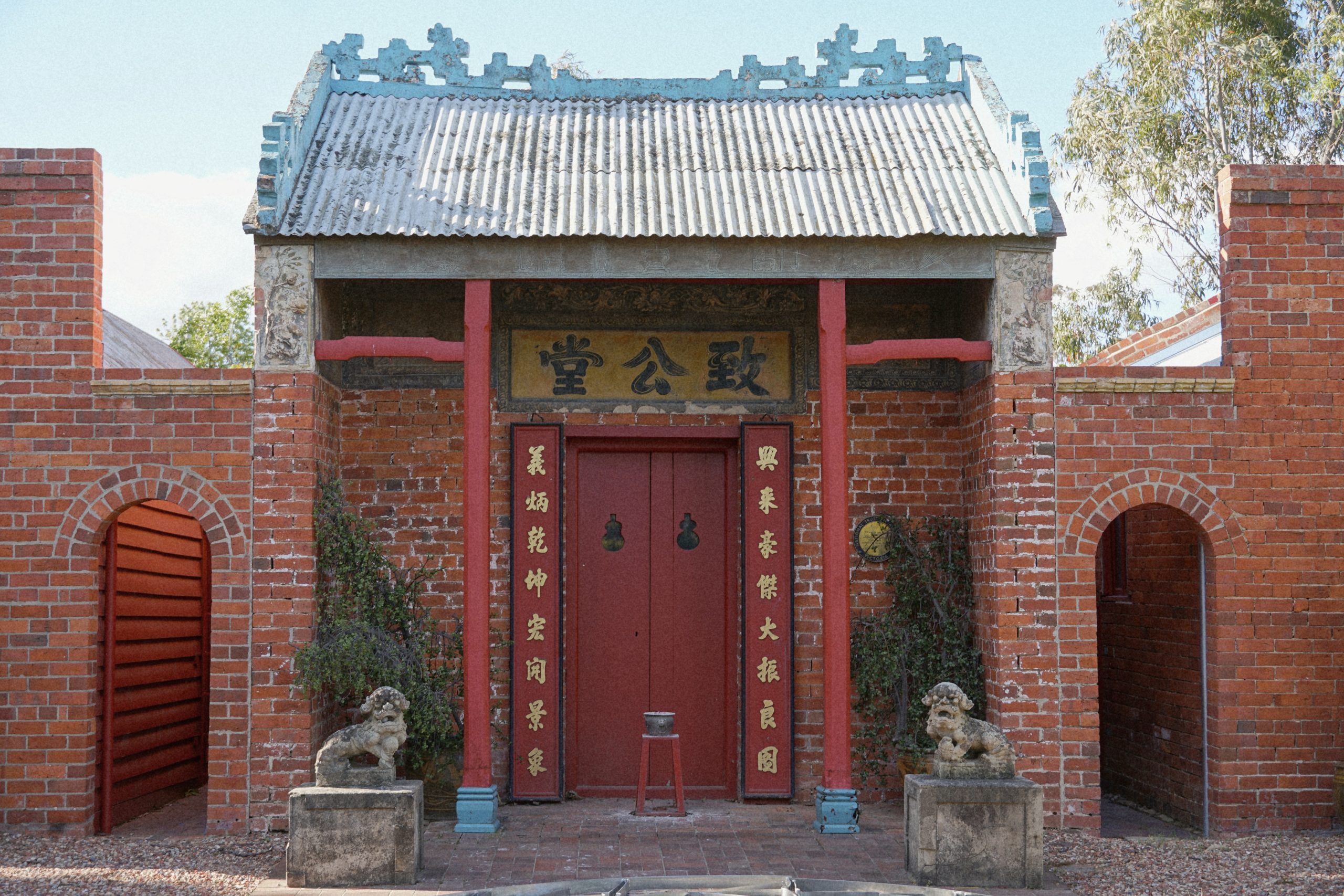
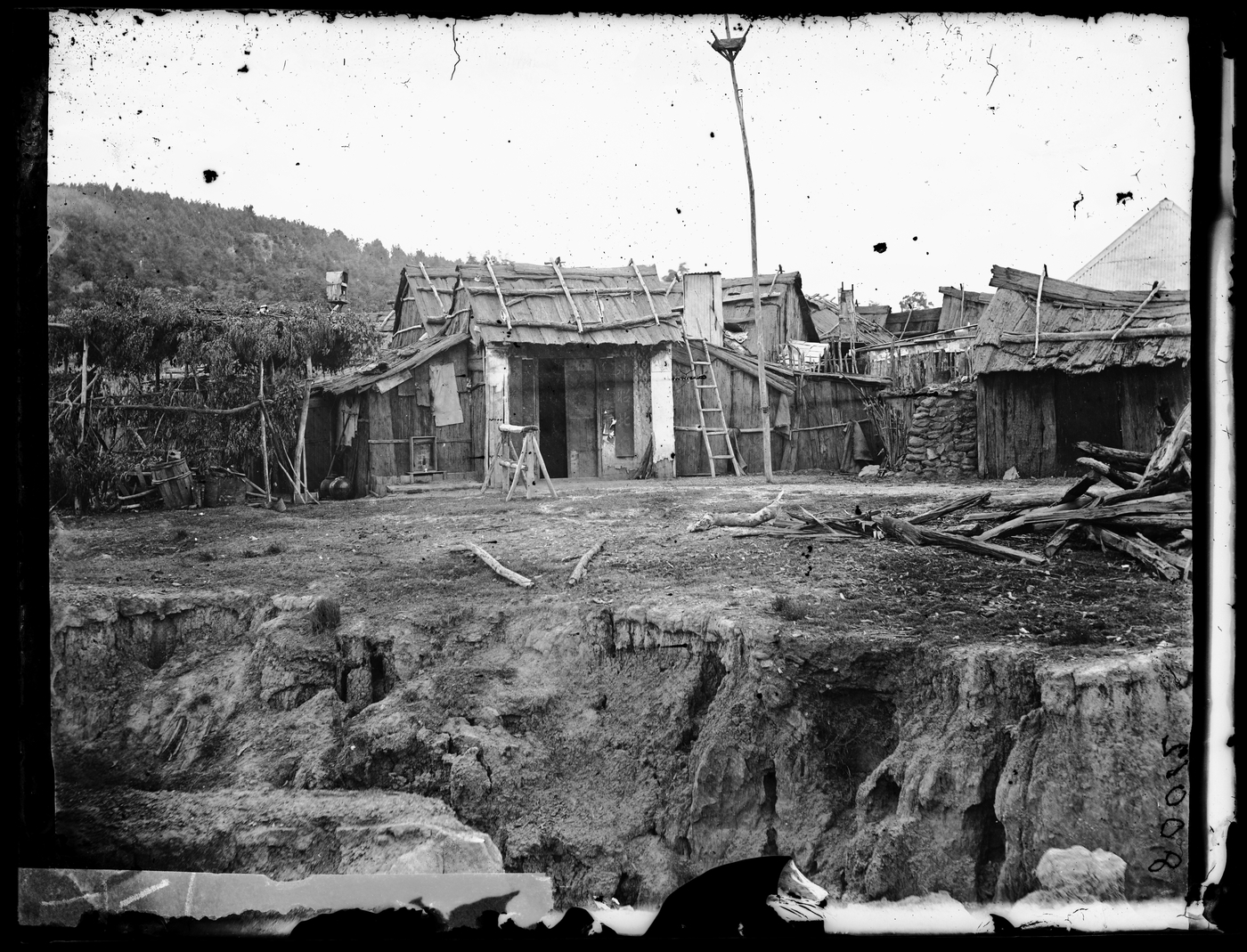
While mutual aid associations were based on clan and district networks, one association, the Yee Hing, was open to all regardless of clan or native place. Chinese migrant workers fanned out across the colonies, searching for gold and then tin, working as land clearers, pastoral labourers, market gardeners, tobacco growers, store owners and cooks, opening branches of the Yee Hing across Australia. As historian John Fitzgerald has noted, up to the 1880s almost ninety percent of Chinese immigrants lived in rural settlements and regional townships in the Australian colonies and they based their lodges at the same rural sites.[1]
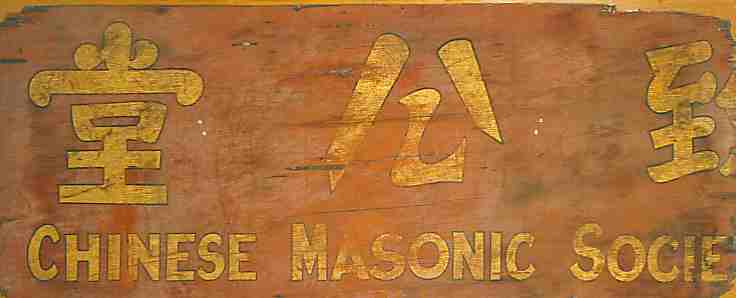
The Yee Hing was a mutual aid society, but because of its origins in China opposing the anti-Qing dynasty, it was a brotherhood sworn to secrecy with its own rituals. When a series of uprisings led to the overthrowing of the Qing dynasty and a republic was established in China in 1912, the Yee Hing finally went public, adopting the formal name of the Chinese Masonic Society, and establishing its Australasian headquarters in Mary Street Surry Hills, Sydney.
It is our hope that further investigation of the histories and heritage of rural and regional branches of the Yee Hing can shed further light on this important Chinese Australian association. Our Chinese Past seeks to build on past research into the Yee Hing/Chinese Masonic Society by historians such as C.F. Yong, Kok Hu-Jin, John Fitzgerald, Paul Macgregor, Barry McGowan, Mei-Fen Kuo and Cai Shaoqing.[2]
This is a continually evolving website, and more information will be published as further research is conducted.
[1] John Fitzgerald, Revolution And Respectability: Chinese Masons In Australian History, in Marilyn Lake and Ann Curthoys (eds) Connected Worlds: History In Transnational Perspective. Canberra: ANU Press, 2005.
[2] C. F. Yong, The New Gold Mountain : the Chinese in Australia, 1901-1921, Richmond, Australia, Raphael Arts, 1977; Cai Shaoqing, From Mutual Aid to Public Interest: Chinese Secret Societies in Australia, in Sophie Couchman, John Fitzgerald and Paul MacGregor (eds.) After the rush Fitzroy Victoria: Arena Printing and Publishing Pty Ltd, 2004; Kok Hu Jin, Chinese lodges in Australia, Bendigo, Victoria, Australia, Golden Dragon Museum, Bendigo, 2005; John Fitzgerald, Big White Lie: Chinese Australians in white Australia, Sydney, NSW, University of New South Wales Press, 2007; Barry McGowan, Tracking the Dragon: A history of the Chinese in the Riverina, Wagga Wagga, Museum of the Riverina, 2010; Mei-Fen Kuo, Making Chinese Australia : Urban elites, newspapers and the formation of Chinese-Australian Identity, Melbourne, Monash University Publishing, 2013; Paul Macgregor, Joss Houses of Colonial Bendigo and Victoria. An Angel by the Water: Essays in Honour of Dennis O’Hoy, Bendigo, 2015